• Thanks to their outstanding physical and chemical properties monoclinic zirconia powders are ideal for use in the manufacture of structural and functional advanced ceramics. Monoclinic Zirconia are essential in a large variety of ceramic applications: pigments for tile decoration, refractories, PZT and dielectric materials, abrasive materials, thermal barrier coatings, but also fillers for membrane applications or even doping agent for LiB cathode materials. 

    ZirPro operates two industrial zirconium oxide manufacturing processes based either on Thermal or Chemical treatments of natural zirconium silicate: 

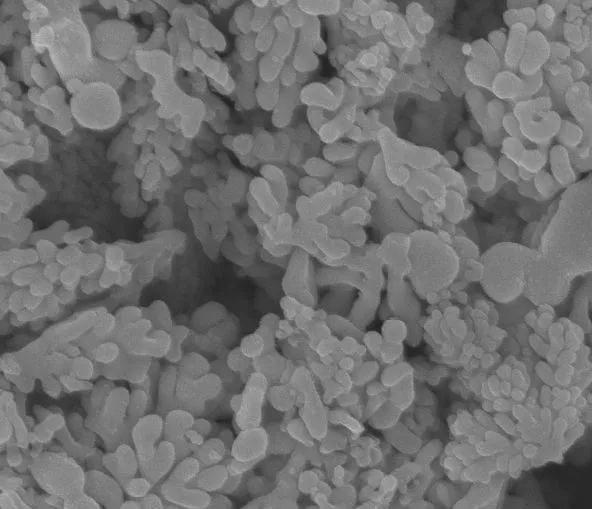
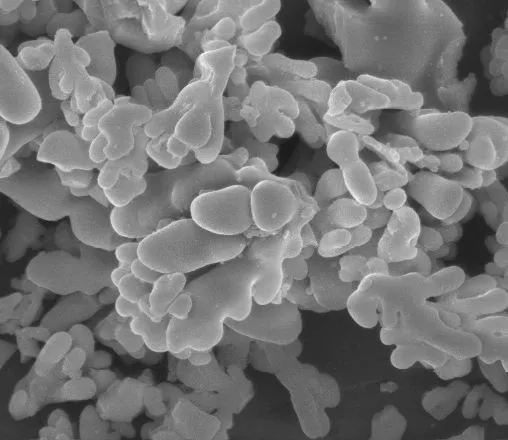
    • Thermal zirconia grades, CC, CS and CF offer higher reactivity than fused powders thanks to their unique dendritic particle morphologies. 

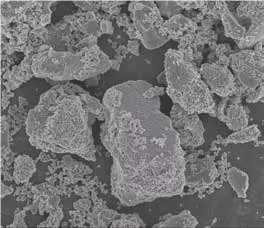
    • Chemical zirconia grades, CZ, CZP and CZE are high purity powders which offer a broad range of particle size distribution and reactivity. 
  • ZirPro Thermal Zirconia Grades

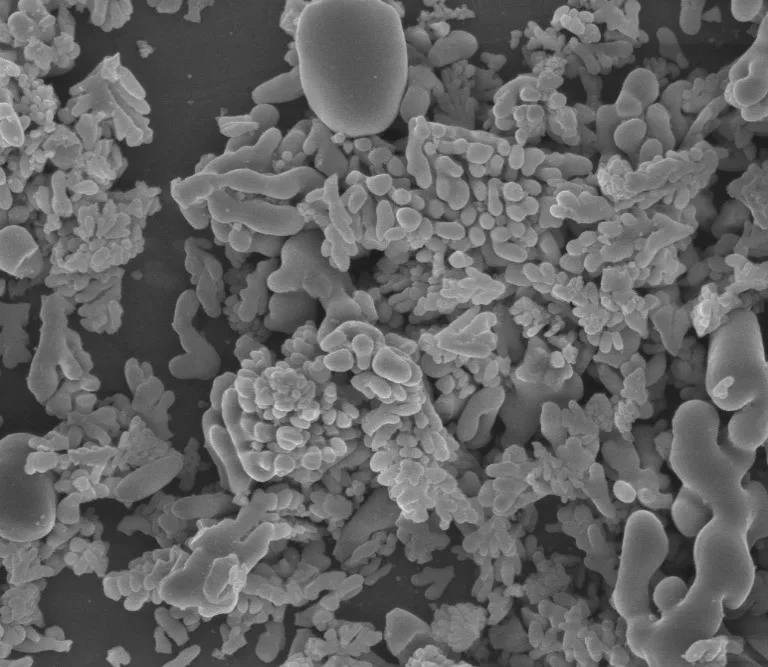
    Thermal zirconia grades offer higher reactivity than fused powders thanks to their unique dendritic particle morphologies. 

    Thermal zirconia grades are manufactured using ZirPro proprietary processes which combine zircon sand fusion and chemical treatment. 

    ZirPro offers three grades of thermal zirconia: CC, CS and CF.  

  • CC, CS, CF, CZ and CZE

     
    Powder picture structure

    CC Powders show High Reactivity thanks to a unique dendritic morphology.

    CC grades are thermal zirconia made by fusion of zirconium silicate at high temperature combined with chemical treatments. Thanks to ZirPro unique process, CC powders offer higher reactivity than fused zirconia. 

    CC powders offer a wide range of d50 and SSA:
    • D50 from 3.5 µm to 0.7 µm
    • Typical specific surface areas from 3.0 to 6.0m²/g
     

    TYPICAL PARTICLE SIZE & SPECIFIC SURFACE AREA


      Monoclinic Zirconia
    CC CS CF CZ CZP CZE
    Purity (%) 98.8 99.0 99.0 >99.9 >99.9 >99.9
    D50 (µm) 0.7 - 3.5 0.6 - 3.5 1.0 - 7.0 2.5 - 25.0 5.0 - 15.0 0.4 - 0.7
    SSA (m²/g) 3.0 - 6.0 1.5 - 6.5 4.5 - 7.5 5.0 - 8.0 2.0 - 3.0 6.0 - 25.0


    meb

    CS grades exhibit superior purity compared to CC grades


    CS grades are obtained through the purification of CC thermal zirconia leading to powders with increased purity together with a better control of the specific surface area (SSA).

    A large range of d50 and SSA is achievable: 

    • D50 from 3.5 μm to 0.6 μm 

    • Typical specific surface areas from 1.5 to 6.5 m²/g 


    TYPICAL PARTICLE SIZE & SPECIFIC SURFACE AREA


      CS Zirconia
    CS10 CS05 CS02 CS01
    D50 (µm) 3.5 3.5 8.0 1.0 - 2.5
    SSA (m²/g) 1.0 - 2.5 1.4 2.9 2.0 - 3.5
    Purity (%) SiO2 0.08
    Na2O 0.02
    AI2O3 0.08
    Fe2O3 0.02


    TYPICAL CHEMICAL ANALYSIS


      Chemistry (wt%)   L.O.I (wt%)


    SiO2 Na2O Al2O3 TiO2 Fe2O3 CaO H2O

    CS10

    -

    CS01

    0.08 0.02 0.08 0.06 0.02 0.02 0.10 0.20


    powder
    CF powders exhibit higher reactivity than CC grades thanks to finer dendritic morphologies.
    CF grades are thermal zirconia powders produced by the fusion of zirconium silicate using plasma arc followed by chemical treatments. The plasma technology enables achieving the highest reactivity among all thermal zirconia grades regardless of the particle size. CF zirconia offers high specific surface area typically around 6 m²/g and particle size ranging from 7.0 to 1.0 μm.


    TYPICAL PARTICLE SIZE & SPECIFIC SURFACE AREA


      CF Zirconia
      CF10 CF02 CF02-LS
    D50 (µm) 7.0 1.0 1.0
    SSA (m²/g) 4.0 - 7.5
    CF02-LS SiO2 0.40 0.10
    Na2O 0.05 0.05
    AI2O3 0.05 0.05
    Fe3O3 0.04 0.03
     
    powders
    CZ and CZP are high purity chemical Zirconia powders offering a broad range of achievable particle size distribution. 
    CZ and CZP grades are derived from zirconium oxychloride.  CZP grades are preferred for sensitive application due to its lower chlorine level (Cl < 200ppm) compared to CZ powders (Cl < 1000ppm). Available particle size distribution ranges from 2.5 to 25µm. Other reactivity and particle size are achievable on request.


    TYPICAL CHEMICAL ANALYSIS


      Chemistry (ppm) L.O.I (wt%)


    SiO2 Na2O Al2O3 TiO2 Fe2O3 CaO

    CZ-3

    CZ-5

    CZ-25

    <100 <50 <100 <50 <50 <1000 <1.0

    CZP-5

    CZP-15

    <100 <50 <100 <50 <50 <200 <1.0
     
    CZE
    CZE powders are chemically processed zirconia grades combining high reactivity and purity. 
    CZE grades are highly engineered monoclinic zirconium oxides, manufactured by chemical precipitation of zirconium salts followed by thermal and physical treatments, for an accurate control of chemical purity, particle size distribution and reactivity. Beyond the commercially available grades, other size distributions and specific surface areas can be developed upon request.


      CZE
      CZE-S1 CZE-M1 CZE-G1
    D50 (µm) 0.4 0.4 0.7
    SSA (m²/g) 4.0 - 8.0 14.0 - 18.0 23.0 - 27.0
    Purity (ppm) SiO2 <200 <200
    Na2O <200 <200
    AI2O3 <100 <100
    TiO2 <50 <50
    Fe2O3 <50 <50
    CI <100 <200